
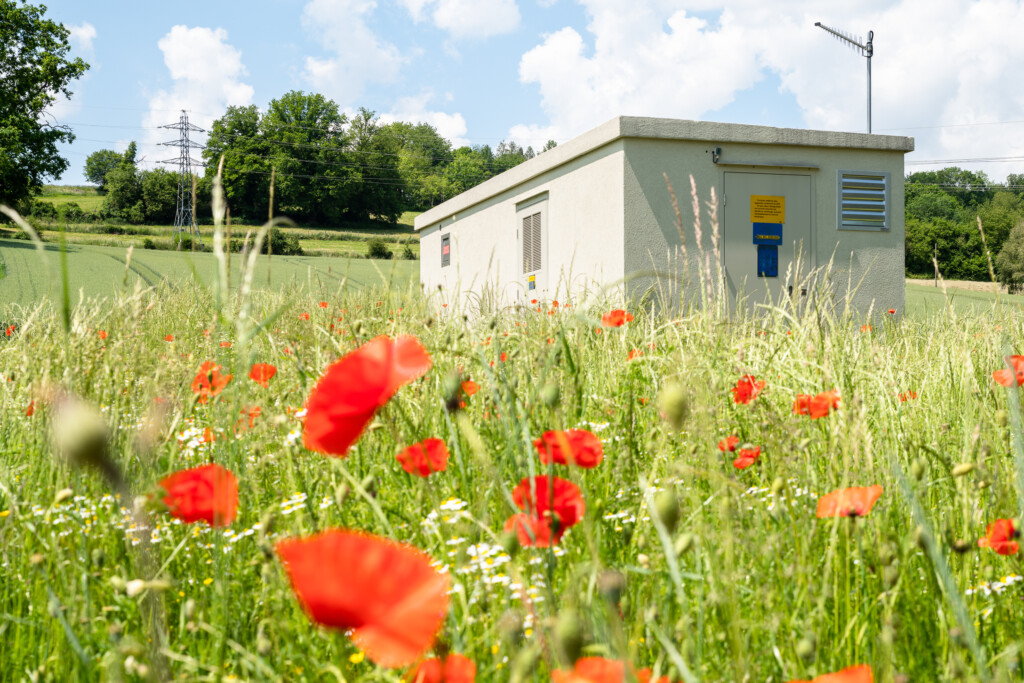
In Europe, there are several balancing reserves designed to ensure the stability of the power grid. The primary reserve in France amounts to 600 MW and is the first to be activated in the event of a supply-demand imbalance on the power grid. In this market, NW provides the power grid with stability and flexibility services through its distributed energy storage units, the JBox®. This business has made NW the French leader in electricity storage and the energy transition’s first unicorn.
In order to ensure the smooth operation of the power system, electricity generation and consumption must always be balanced. In France, RTE (the electricity transmission system operator) maintains this balance in real time. To achieve this, RTE establishes and activates balancing reserves, provided by entities capable of injecting or withdrawing energy from the grid, as needed.
Thermal power plants provide the grid with mechanical inertia that helps absorb imbalances between production and consumption; they are equipped with rotating masses. However, connected to the grid via electronic inverters, renewable energy sources lack such masses. Consequently, they do not contribute to mechanical inertia. As renewable energy sources become more prevalent, the grid must respond more quickly and frequently to maintain the balance between supply and demand, thereby preserving the stability and reliability of the electrical system. This requires greater flexibility.
JBox® units are electricity storage devices that help to balance the grid
To address imbalances between generation and consumption, RTE ensures that units can continuously vary the power they inject into or draw from the grid. The grid operator has three types of reserves for this purpose: primary, secondary and tertiary. NW now accounts for a significant portion of the primary reserve in France with its distributed storage units, JBox®.
The primary reserve is a service that ensures the stability of the power system. It is provided by entities (e.g. nuclear, gas and hydroelectric power plants, large consumers and batteries) that are capable of adjusting the power they feed into or draw from the grid. The primary reserve can be activated at full capacity in under 30 seconds when frequency variation reaches 0.2 Hz. The primary reserve market in France is open and JBox® units play a key role in it.
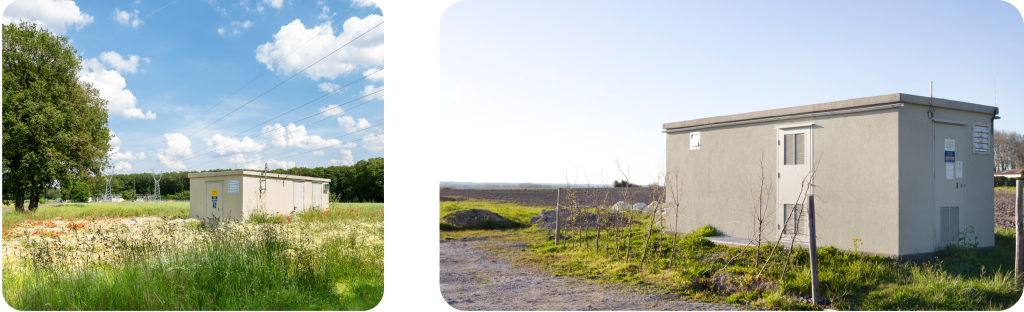
An innovative distributed battery storage system
Developed since 2018, the JBox® is a compact, lithium-ion battery-based electricity storage unit. It comes in the form of a plug-and-play container. This French technology is protected by several world-class patents. In practical terms, the batteries enable JBox® units to store energy that can be fed back into the grid as required. JBox® units therefore contribute to reserve mechanisms.
Before the introduction of batteries to the primary reserve market, low-carbon power plants had to reduce part of their output that was allocated to primary reserve. However, with the deployment of JBox® units, these plants can now feed their full capacity into the grid, replacing fossil fuel-based generation sources. JBox® units therefore offer an environmental benefit: in the primary reserve market, batteries replace controllable, low-carbon power plants, particularly nuclear and hydroelectric ones. These plants are fully integrated into the active generation fleet, enabling a reduction in fossil fuel-based thermal generation. By providing flexibility services for electricity grids, JBox® units have become an essential component in the strategic sector of electricity storage.
NW sources its storage services from suppliers holding guarantees of origin. These guarantees of origin certify the production of green electricity and are purchased from renewable energy producers. They certify the injection of renewable energy (wind, hydro or solar) into the power grid. NW therefore only sources renewable energy, representing another step forward in supporting the energy transition.